
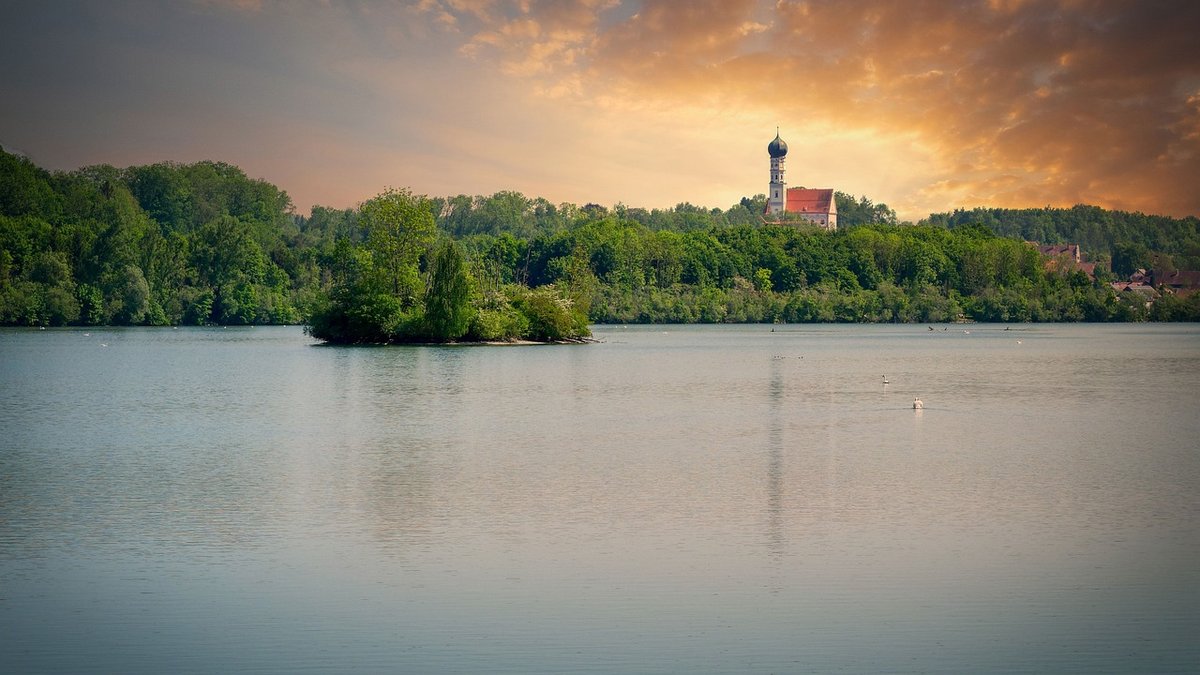
Flooded former gravel workings have quietly become some of the best inland birdwatching sites in the country. Because they were dug for sand and gravel rather than designed as parks, they offer a jumble of habitats in a small area: deep open water, shallow flooded margins, gravel spits, wooded islands and reed-fringed bays. That variety is exactly what winter wildfowl need, and it is why a pit that looks like nothing much in July can be alive with birds in January.
Cold weather is the trigger. As temperatures fall and smaller ponds, canals and marshes freeze, ducks and sawbills concentrate on the open water that remains. Pits fed by streams or springs, or simply deep enough to resist a frost, become refuges. A pit holding a dozen ducks in November may hold several hundred by the middle of a hard spell, and the birds are often unusually approachable because they have nowhere else to go.
Goldeneye are the stars of a cold morning. These small, compact diving ducks arrive from Scandinavia and the Baltic from October onwards, peaking in midwinter. Drakes are striking black and white with a bold round cheek patch; females are grey-brown with a chocolate head and a neat white collar. They usually sit well out on open water in loose rafts, diving for molluscs and insect larvae, and the drakes perform their odd head-throwing display even in the depths of winter. They seldom come close, so a telescope earns its keep.
Goosander are the ones that make people stop and stare. Sawbills with long, hooked red bills, they hunt fish in loose lines, driving prey ahead of them before diving. Drakes are creamy white with a dark bottle-green head; females and young birds show a grey body and a rich chestnut head with a shaggy crest. Look for them loafing on islands, spits and bank edges between feeding bouts, and listen for the low, croaking calls of displaying males.
Wigeon are the soundtrack of the season. Their whistled whee-oo carries across the water, and they are grazers rather than divers, often waddling out onto banks, causeways and flooded grass to crop turf. Drakes have a chestnut head with a creamy crown stripe and a pinkish breast. When a pit holds wigeon, it rarely holds them alone: expect teal, gadwall, shoveler and tufted duck mixed in, with pochards and the occasional smew or red-crested pochard on deeper water.
Work a pit systematically rather than scanning at random. Diving ducks favour the deepest water; dabblers and grazers use the shallows; islands and spits hold roosting birds; reed fringes hide bitterns, water rails and wintering chiffchaffs. On a hard frost, the entire population of a pit may funnel into a single ice-free bay, so it pays to check the edges first.
Winter birdwatching is a sitting-still game, so dress warmer than you think you need. The difference between a comfortable hour and a miserable one is usually in your feet and hands.
Keep your optics under your coat when you are not using them. Fogged lenses are the single most common reason people give up early on a frosty morning, and condensation takes far longer to clear than it does to form.
Gravel pits are often working reserves with permits, seasonal closures and vulnerable roosts, so check local arrangements before setting out and stay on marked paths. Approach hides quietly and keep movement behind the shutters. Use hedges and banks as screens rather than walking the exposed bank where wigeon graze.
Keep dogs on a lead near water and never let them swim towards rafting ducks. The last hour of daylight matters most: goosander and goldeneye come in to roost then, and a single disturbance can push birds off a pit for the rest of the evening. If you find a roost, watch it from a distance and let the birds settle.
The best hours are the first two after dawn and the last two before dusk, when birds feed actively and the light sits low and golden behind you. Hard frosts concentrate wildfowl wonderfully, but a sudden thaw scatters them again, so watch the forecast and pick your day. Heavy rain that floods the margins brings wigeon onto grass, and a biting easterly often pushes everything into the sheltered, leeward bank where it is calm and slightly warmer.
Wrap up, take your time, and let the pit come to you. The rewards — a raft of goldeneye catching the low sun, a line of goosander herding fish along a spit, the whistles of hundreds of wigeon drifting over frosty reeds — are among the finest spectacles British winter birdwatching has to offer.

Hi, my name is Anthony kuber. I am artist and fashion designer.
I love to travel and writing blogging.
Your email address will not be published. Required fields are marked *
Software Developer & Writer
Hey, I'm Diva, a developer and writer blending code and creativity. I'm driven by a deep curiosity and a relentless pursuit of excellence. Join me as I craft digital solutions and captivating stories.


