
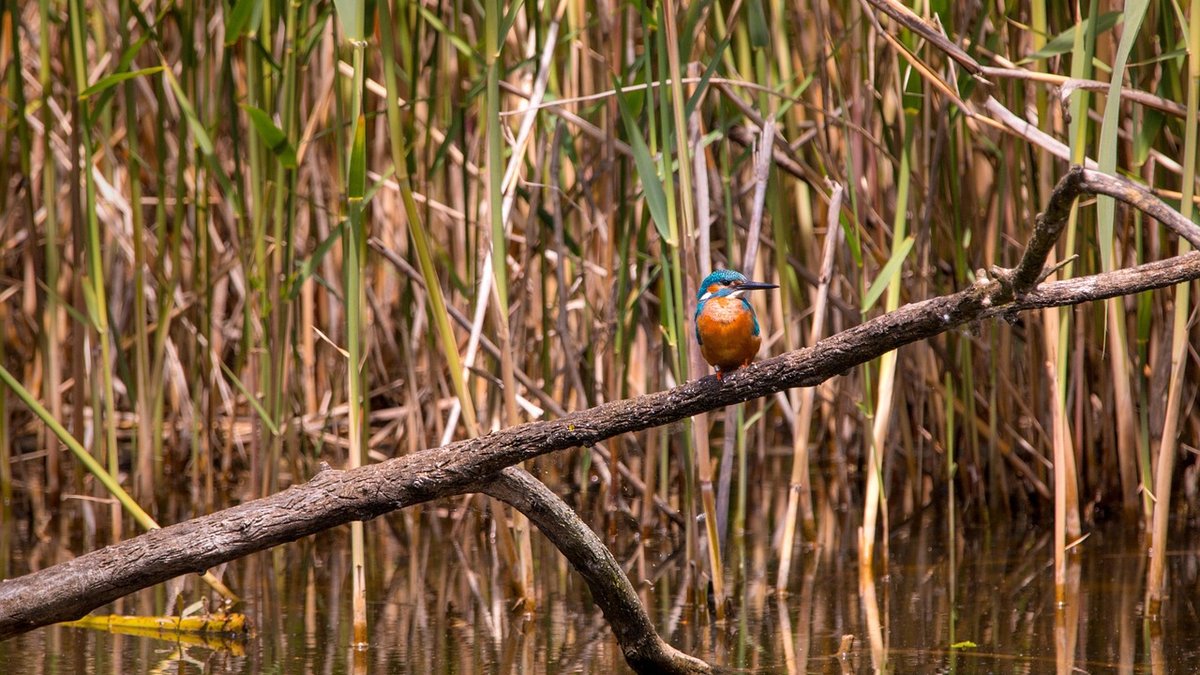
The strip of shadow between open water and the first line of trees is one of the richest places in Britain for wildlife photography. It is also one of the most frustrating. Light levels here can be two or three stops darker than the water you were just metering from, and the contrast between a sunlit ripple and a shaded bank is enough to fool any camera's meter. Add a kingfisher that will not sit still, and you have a recipe for soft, noisy, slightly blurred images.
None of that is a reason to pack up. It is a reason to change how you approach the shot. Low light is not an obstacle to work around; it is the whole character of the place, and with a few disciplined habits you can come home with moody, atmospheric frames that the middle of the day simply cannot offer.
The instinct is to keep ISO as low as possible for cleanliness. At a shaded lakeside at 6am in October, that instinct will cost you the shot. A slightly grainy sharp image beats a smooth blurred one every time, and modern sensors handle high settings far better than most photographers assume. For woodland-edge work, start at ISO 1600 and be willing to go to 6400 without flinching.
If your camera offers dual gain or a second native ISO, learn where it sits and do not be afraid to use it. Noise reduction software is very good now, but no software can rescue a blurred frame.
Handholding at 1/60 sec while leaning around a willow trunk is a gamble. A support turns that gamble into a certainty. The trick is choosing one that suits the awkward ground you find at the water's edge.
A full tripod is ideal for waiting on a heron or a hunting otter, but leg spikes and muddy banks are not friends. Look for a tripod with rubber feet you can swap, and use the centre column sparingly — raised columns amplify vibration. Where tripods are banned or impractical, a beanbag draped over a fallen branch or a fence rail is often more stable and far quicker to deploy. On a narrow boardwalk, a monopod with a tilt head gives you three or four stops of help without blocking the path for other walkers.
Whatever you use, turn off image stabilisation when the camera is locked down, and use a two-second delay or a remote release. The act of pressing the shutter moves more than most people believe.
The soft, directionless light under a canopy is not a problem to be fixed with flash. It is a gift. Shadows here have gentle gradients, no hard edges, and they let you place a subject against a clean dark background — a technique that makes a shy wren or a nuthatch pop out of the frame.
Underexposing the shadows deliberately, by a third to two-thirds of a stop, often gives richer colour than trying to lift everything evenly. Deep, cool greens and browns suit British woodland far better than flat, evenly lit tones.
The finest lens in the world will not help if you arrive as a silhouette against the skyline. Approach the water's edge slowly, crouch to break your outline, and use the trees as cover. Arrive before first light, settle into position, and let the wood come back to life around you. Otters, deer and even the shy water rail respond to stillness far more than to camouflage.
Keep your distance, never disturb a nest or a feeding site, and remember that the welfare of the animal always outranks the photograph. A quiet retreat is the mark of a good photographer.
Before every session, set your camera up in a way that lets you react quickly.
Do this consistently and the technical side becomes automatic. You can then put your attention where it belongs — on the quiet movement at the edge of the water that most people walk straight past.

Hi, my name is Anthony kuber. I am artist and fashion designer.
I love to travel and writing blogging.
Your email address will not be published. Required fields are marked *
Software Developer & Writer
Hey, I'm Diva, a developer and writer blending code and creativity. I'm driven by a deep curiosity and a relentless pursuit of excellence. Join me as I craft digital solutions and captivating stories.


